An influencer program for MapleStory Universe composed of 36 creators
Operated around the MapleStory Universe X channel for viral engineering
Generated virality through second- and third-wave content production
Key Results
36 creators onboarded and managed as a standing content program
1,193 pieces of content produced over 3 months — roughly $43 per piece
70%+ share of the official X feed
$52K budget deployed
Ownership — Program design & selection criteria 100% · Program operation 100%
Nexpace
08May 2025
Influencer & Content · Led · Nexpace
Global Stream Clash — Part of the MapleStory N launch campaign
A 10-day competition campaign where streamers complete in-game missions on stream and earn prize money based on their final rank
Paid sponsorships weren't an option under local regulations — so the program was redesigned as a fully compliant competition built around a $200K prize pool
Key Results
~$300 cost per stream — about 1/10 the cost of standard industry sponsorship
Global Go-to-Market — Launch Momentum and P2E User Acquisition
This was the Go-to-Market mission for the simultaneous market entry of MapleStory Universe and MapleStory N.
A nine-month beta season called 'The Genesis' had already built a strong core community.
Since that community would flow in at launch, marketing's job was to reach the segments not yet touched.
I identified P2E users — those drawn to MapleStory N's earning mechanic — as the target, and defined the GTM mission around them.
02
Strategy
Front-end / Back-end Marketing Strategy
In Web3 and P2E, regulations restricted even traditional marketing tactics.
New tactics also lose their edge as audiences get used to them.
So I built a new concept.
A website is built from a front-end (what's visible) and a back-end (what isn't). I split the marketing strategy along those same two axes.
Back-end is the work the target doesn't see — the foundation for everything else. Content and viral pipelines seeded across third-party channels (media, research, KOLs, etc.) are the back-end work.
Front-end is the official campaigns the target sees directly. In this GTM, the Meme Short-Form Campaign and Global Stream Clash were the front-end.
When front-end marketing drives engagement on top of a solid back-end, second- and third-wave organic spread grows the effect further.
03
Planning
Meme Short-Form Campaign
I designed meme shorts with aggregator-bait headlines like "MapleStory 3 release?" to spark curiosity and build launch momentum.
Produced everything from low-fi B-tier shorts to fully animated pieces — all carrying MapleStory N's core appeal. I also partnered with MapleStory's flagship creator (Medocbul) for dedicated animation videos.
Posted the shorts through fan-page-style channels so they could serve as viral source material.
Top-performing meme shorts — 5 of the highest-performing pieces (click to expand)
Global Stream Clash
I designed an influencer-driven campaign to viralize MapleStory N's gameplay post-launch.
Traditional paid sponsorship was off-limits under regulation, so I structured it as a streaming competition to drive organic streams instead.
I built it as a 10-day prize-tiered structure where streamers complete in-game missions on-stream — concentrating streaming activity over a focused window.
Content production went smoothly, but virality wasn't kicking in.
Organic virality takes time, and waiting for it risked missing the launch window.
I pivoted from organic to paid distribution, shifting the plan toward fast targeted reach.
Global Stream Clash — Abuse Management
With prize money on the line, various forms of abuse surfaced.
I reviewed guidelines and judging criteria daily to keep fairness intact.
For the final ranking, I verified abuse through data before deciding on disqualifications.
05
Results
User Acquisition
New Users
256K
First 2 weeks post-launch
DAU
50K–70K
Daily active users
Meme Short-Form Campaign
After the organic-virality attempt, I pivoted to paid reach. Deployed $250K across four channels (Facebook · YouTube × Mobile · PC), hitting 110M Impressions in roughly one week to land the awareness target — then pivoted to conversion ads to drive clicks.
Total Impressions
209M
$250K · 4-channel paid
Total Clicks
471K
CPC $0.53 · CTR 0.23%
Global Stream Clash · 10 Days
Over the 10-day competition, 172 global streamers signed up. The result: 664 livestreams, 4,290 cumulative streaming hours, and 1.1M VOD views. All 172 streamers joined without paid sponsorship fees — participation was driven by the competition structure and the $200K prize pool itself. That put the cost per stream at roughly $300 — about 1/10 the cost of standard industry sponsorship.
Cost / Stream
$300
~1/10 of industry standard
Live Streams
664
4,290 cumulative hours
VOD Views
1.1M
Cumulative VOD views
Nexpace · MapleStory Universe
Case Study ②
Infinite IP Playgrounds Showcase
Timeline
Jul 7 — Jul 28, 2025
Category
Brand Marketing
Role
Campaign planning, execution, and direction
Partners
AI film makers, animation freelancers, video studios
Budget
$82K
01
Mission
Shifting perception from a single game project to an ecosystem project
MapleStory Universe was an ecosystem project, but the market kept reading it as a single game project.
Having MapleStory N as a flagship game was an asset, yet it also boxed the project into a game frame of its own making.
So I set the mission: define the ecosystem's vision and direction, and broadcast it to the market.
02
Strategy
Defining the ecosystem vision and unveiling it through a showcase
A vague vision no one could parse wouldn't move the mission — the vision had to be redefined into something immediately understandable.
So I built the concept of Infinite IP Playgrounds.
And shifting perception requires more than a clear vision — it requires a clear inflection point.
So I chose a showcase as the core strategy — a format that could pull attention to the moment.
03
Planning
Showcase planning
Under the Infinite IP Playgrounds concept, the showcase was planned in 7 parts.
01
Intro — A World Where Infinite IP Playgrounds Are Realized
A non-fiction drama, AI-generated, depicting what the world looks like once Infinite IP Playgrounds takes shape.
02
Keynote
A keynote where the CEO opens the showcase and lays out the vision.
03
Core Concept — Metaplay
A guest-led podcast format that unpacks Metaplay — the core concept of Infinite IP Playgrounds — in accessible terms.
04
Intermission — Quiz Show
A quiz-show animation that recaps the prior parts — designed to add fun to an otherwise dense showcase and bridge into the next part.
05
Core Concept — Builder Ecosystem
Infinite IP Playgrounds needs builders to bring services to life. This part introduced the builders we've onboarded and the support program to argue feasibility.
06
Road Map
Revealed the major project plans for H2 2025 — laying out an ecosystem expansion roadmap to show this isn't just vision but action already scheduled.
07
Cookie
A teaser inserted at the very end of the showcase — designed to bait follow-up content and post-showcase virality.
04
Execution
Modular production to crack a 3-week timeline
The biggest constraint on this campaign was the 3-week timeline.
To overcome the physical lack of time, I split the parts and ran modular production in parallel.
I distributed leads and agencies across AI, motion, podcast, etc. — then pulled it all back together. Finished in 3 weeks.
Watch · Infinite IP Playgrounds Showcase Full Session
Content planning, production direction, vendor management
Partners
Webcomic studio, video production studio
Budget
~$75K
01
Mission
Making MapleStory Universe and $NXPC's mechanics understandable to a general audience
In Web3, projects typically disclose their core mechanics in whitepaper form.
The mechanics matter, so the content is complex and dense — and in whitepaper format, only a tiny audience could actually parse it.
But MapleStory Universe and $NXPC's mechanics had innovative parts, so I figured that if everyone could grasp them, we'd have a real edge in the space.
02
Strategy
Introducing the core mechanics in a format people can absorb without effort — and actually enjoy
I analyzed what content general audiences consume most.
Short-form video, film, and other options were on the table, but webcomic was both the most actively consumed format and the most fitting for IP-based content.
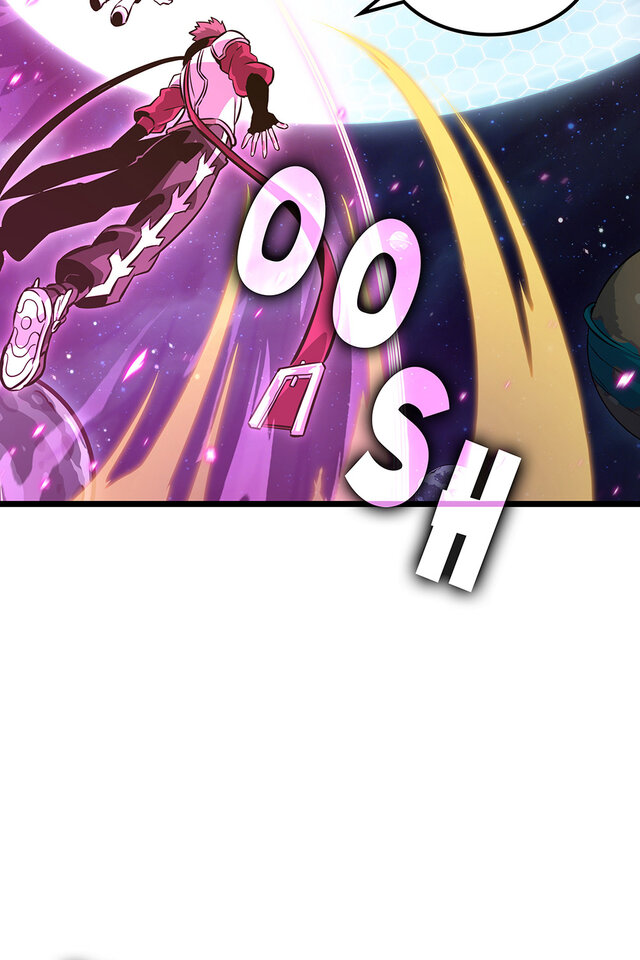
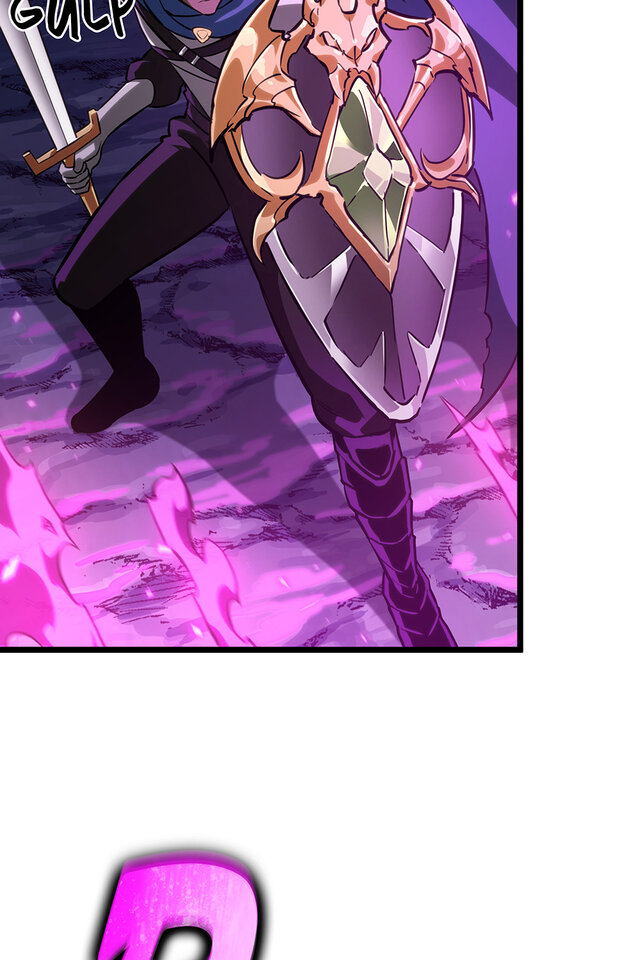
Since webcomics alone can't carry structured content like mathematical formulas, I chose a hybrid format — webcomic plus embedded video.
03
Planning
Premises
Carrying MapleStory Universe and $NXPC's mechanics was the top priority.
The webcomic had to stand on its own — a story strong enough to be worth reading.
Core Mechanics to Convey
Decentralization — item issuance, once a game studio's exclusive right, can now be done by anyone via NXPC. Needed to explain how the actual issuance structure works.
NFT Interoperability — how NFTs in MapleStory Universe interoperate and stay compatible across multiple services. The structural mechanics had to be explained.
Core Value of Contribution and Reward — participating as an ecosystem builder leads to meaningful rewards, and this is the core value of MapleStory Universe.
Story Structure
Protagonist — a developer whose work isn't going well
Guide — a MapleStory NPC narrator
Core Story — the protagonist tours the planets (services) of MapleStory Universe, finds inspiration, ships their own service, and succeeds. The guide tags along, naturally surfacing the core mechanics of MapleStory Universe and $NXPC along the way.
04
Execution
Read the technical docs 10+ times
To reconstruct the core mechanics into a webcomic story, I needed clear understanding. I read the technical documentation more than 10 times and pinned down the essentials.
Webcomic studio and video studio working in sync
Two studios were producing the work, but for the output to feel seamless, I built a collaboration structure where scenario, direction, characters, design, and even video mood were shared across both teams.
$288K total ($220K paid media + $68K unboxing live)
01
Mission
Rebuild trust after three release delays, flip sentiment, and build cultural momentum
Expectations for the game were high, so three release delays eroded community trust and left players disappointed.
First, we needed to flip that sentiment — and beyond that, build enough cultural momentum to offset the high price-point hurdle and lower the decision threshold.
02
Strategy
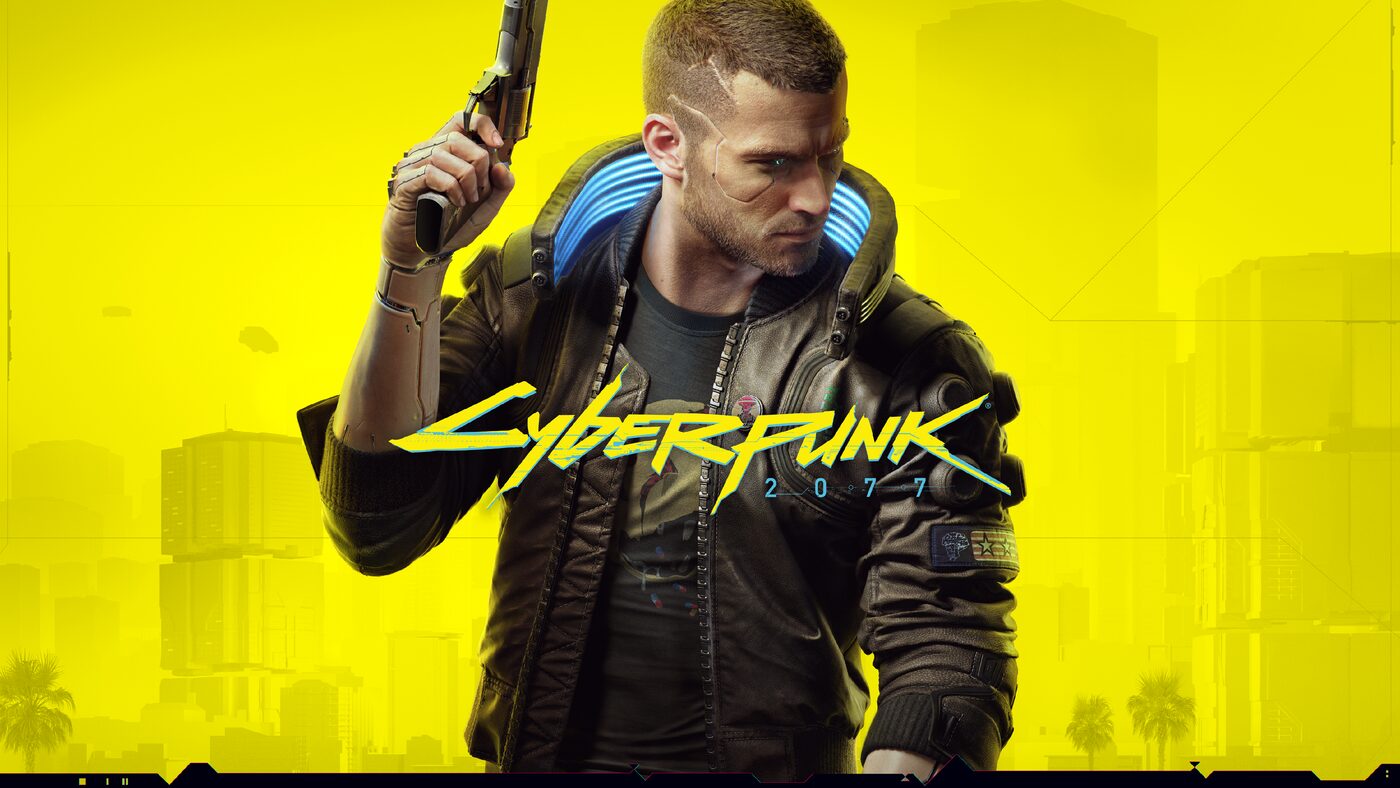
"Cyberpunk 2077 is everywhere"
Because the game had been hotly anticipated from the start, brand awareness already existed in the gamer community. Three release delays had also imprinted the name through controversy.
I decided the strategy had to lean into this — that sustained exposure across the channels gamers actively use could build momentum.
But multi-channel exposure alone wouldn't generate momentum. So I added an impact-driven hook on top.
03
Planning
Paid Media Campaign
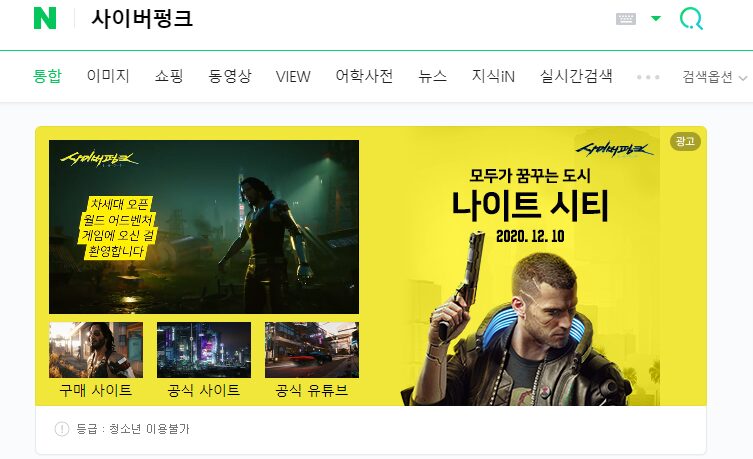
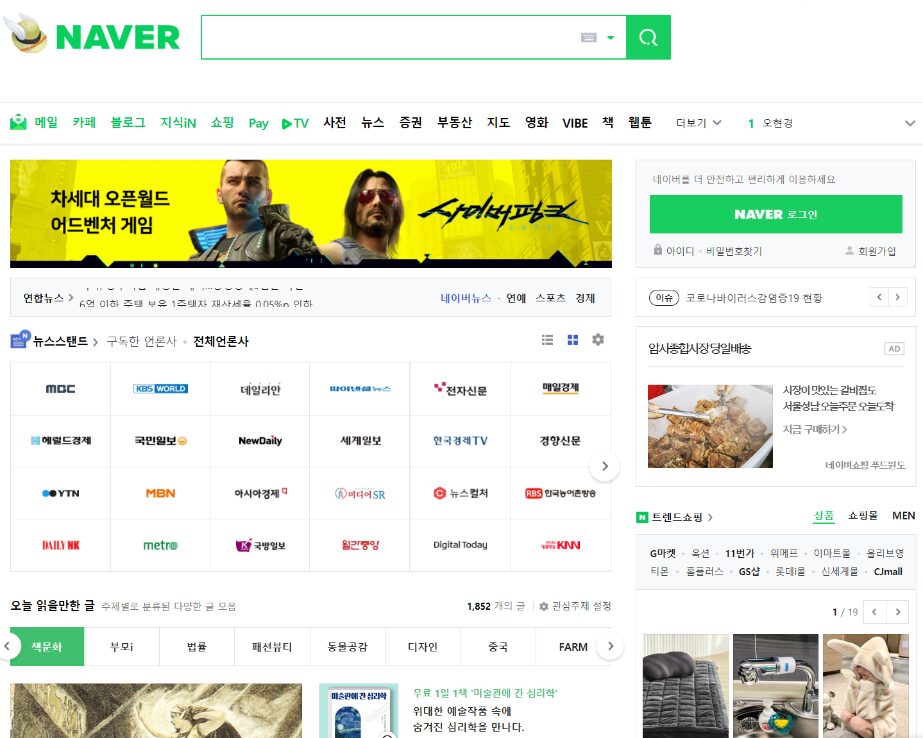
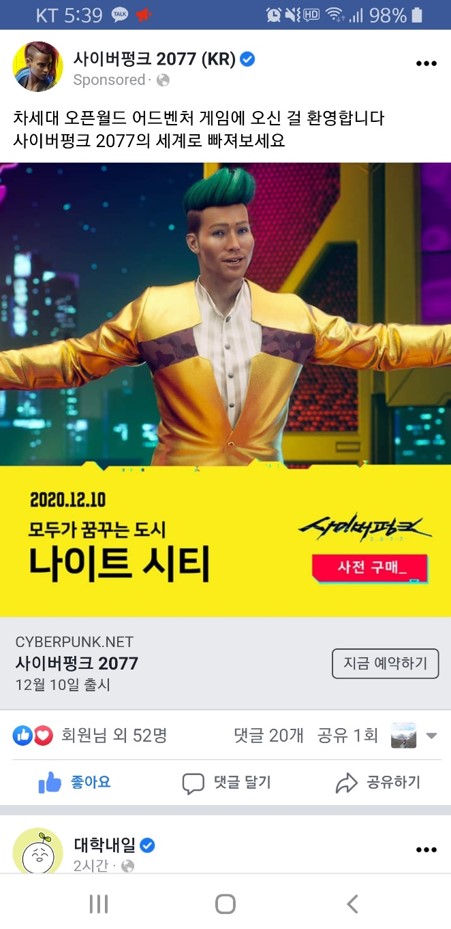
The paid media campaign was the starting point and build-up of the "Cyberpunk 2077 is everywhere" strategy.
From target learning through total media saturation, exposure was progressively expanded across channels in distinct phases.
Budget was deliberately concentrated in the launch-countdown window — so that among PC/console game ads, Cyberpunk 2077 would dominate.
Phase
Period
Goal
Channels · Audience
Budget
Phase 1
Jun 26 — Jul 3
Target learning
Selected media / Tier-1 audience
2.7%
Phase 2
Oct 12 — Oct 29
Build purchase intent
Major media / Tier-1 audience
10.2%
Phase 3
Nov 20 — Dec 3
Sentiment turnaround (broaden audience)
Major media / Tiers 1·2·3
7.9%
Phase 4
Dec 4 — Dec 21
Total media saturation
All media / Tiers 1·2·3
79.2%
Unboxing Live Campaign
The unboxing live was designed as the exclamation point of "Cyberpunk 2077 is everywhere."
The merchandise unboxing format typically run with influencers for AAA games was reimagined as a Cyberpunk 2077–specific version.
What I focused on most: this campaign had to land impact on its own — strong enough to shock the market.
To that end, three considerations went into the planning:
Differentiated unboxing — visualized Cyberpunk 2077's distinctiveness in a way no other game could be compared to
Two-way interaction — creators and viewers solved missions together, letting the audience experience the game vicariously through participation
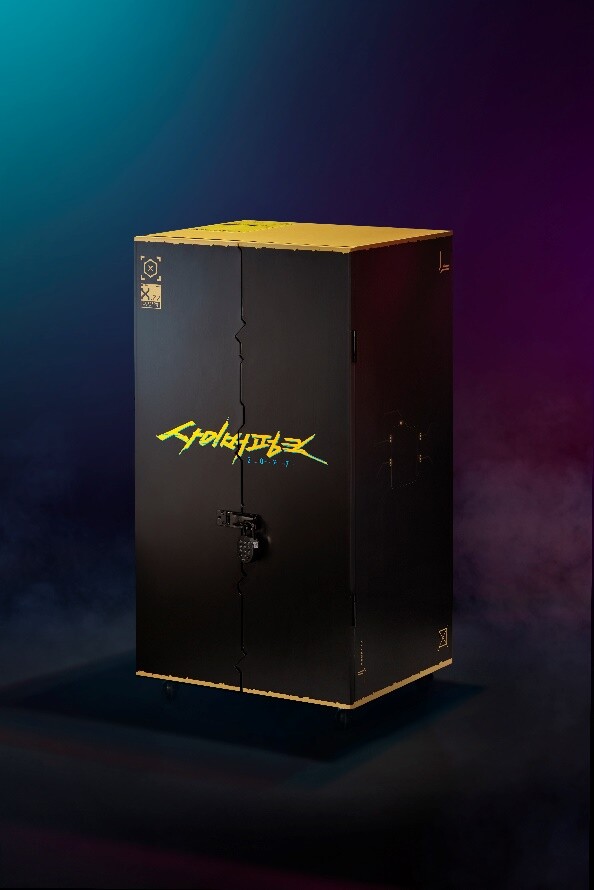
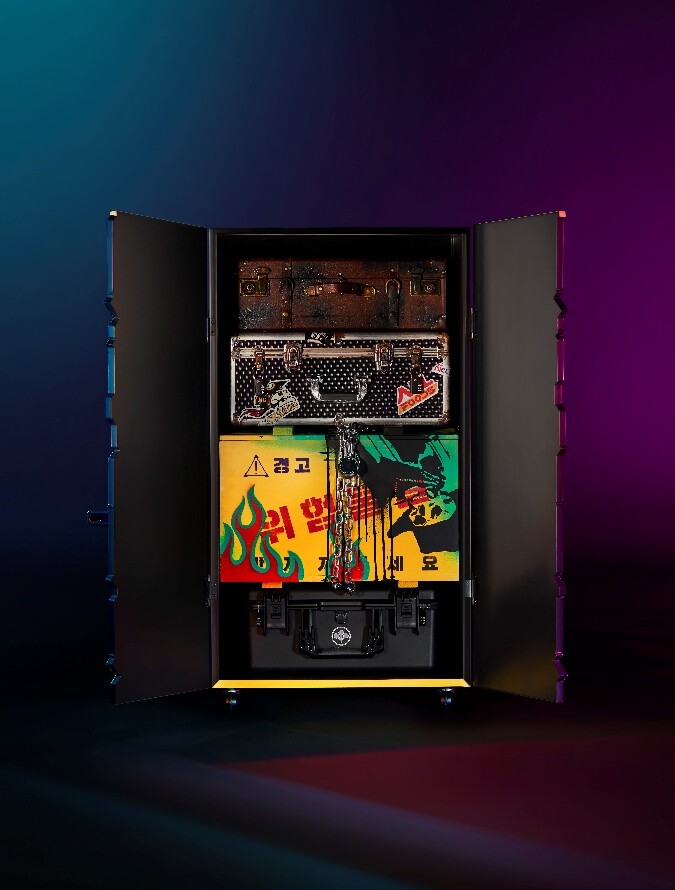
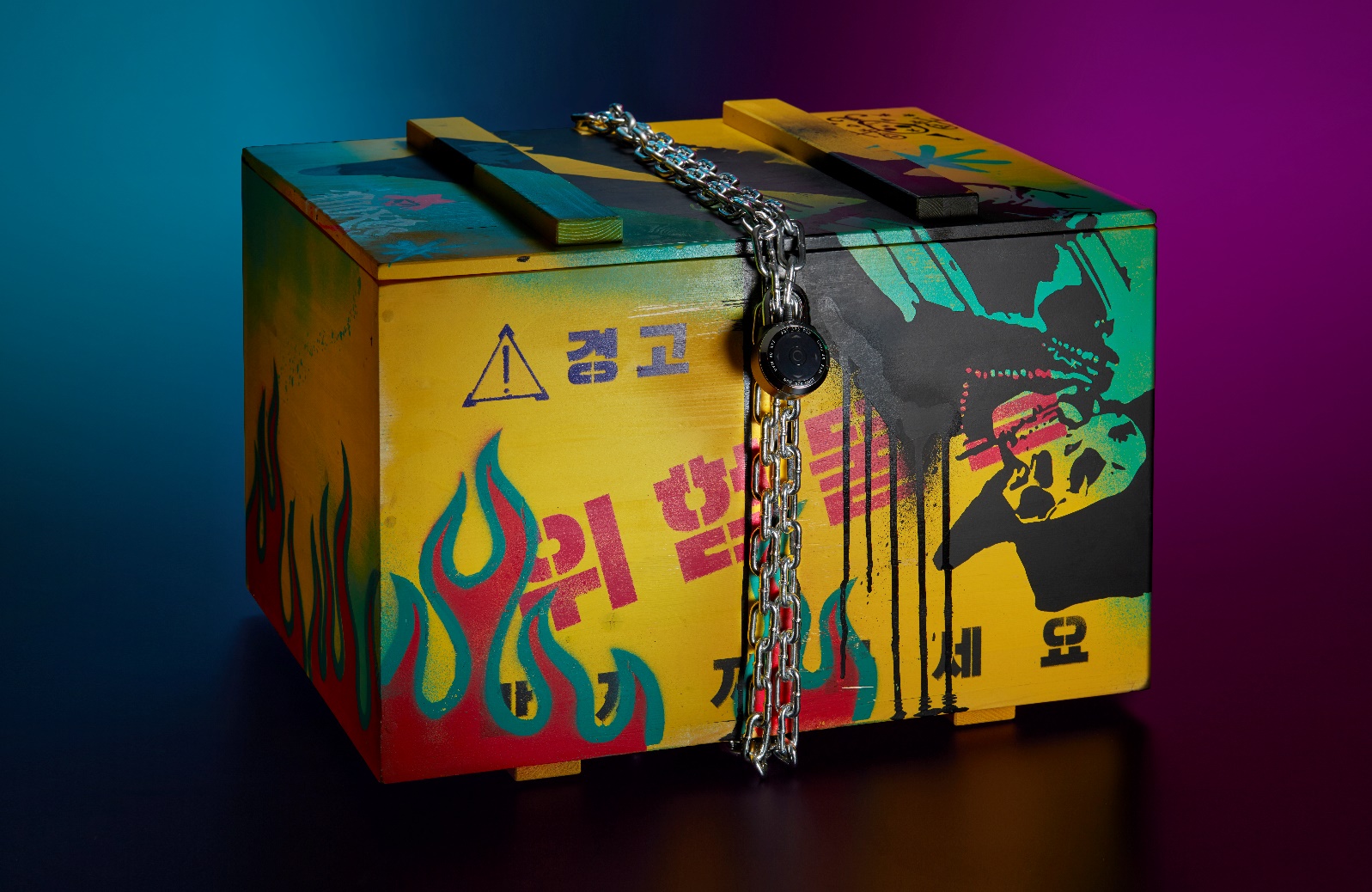
Scale and craft — gave the box itself WOW points through massive scale and emotional details
04
Execution
Mid-campaign release delay
Right after Phase 2 wrapped, the third release delay was announced.
To absorb the shock of another delay on an already-fatigued audience, I immediately rewrote Phase 3's mission from simple audience expansion to "sentiment turnaround" — stabilizing the campaign before Phase 4's critical media saturation began.
Right after Phase 2 wrapped, the third release delay (Nov 19, 2020) was announced — pushing launch to Dec 10. Phase 3 was redesigned as a "sentiment turnaround" mission rather than a simple audience expansion, and Phase 4's media saturation was used to compress maximum impact into the launch window.
Media saturation, run efficiently
I defined the channels the target audience actually moves through, and ensured Cyberpunk 2077 surfaced at least once per day in each of those places.
Not a scatter strategy of "more money across more media" — instead, precise targeting and frequency control to run efficiently.
A strategic blend of global media (Google, Facebook, etc.) and local media (NAVER, Kakao, etc.).
Simultaneous broadcast by top streamers
I worked through what the most impactful approach would be, and went with a simultaneous broadcast aligned with the launch countdown.
If the top streamers all streamed Cyberpunk 2077 content at the same time, viewers would literally feel "Cyberpunk 2077 is everywhere."
Top streamer collaboration, simultaneous live broadcast — click to play the highlight reel.
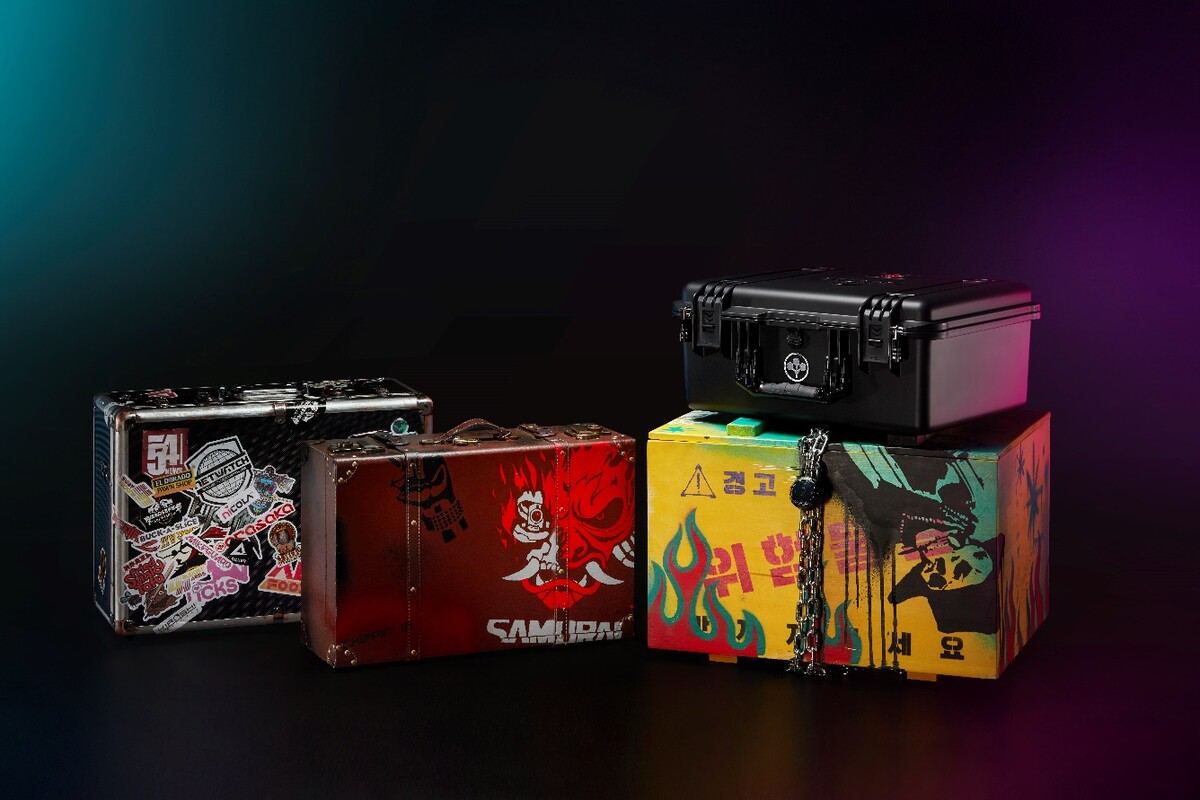
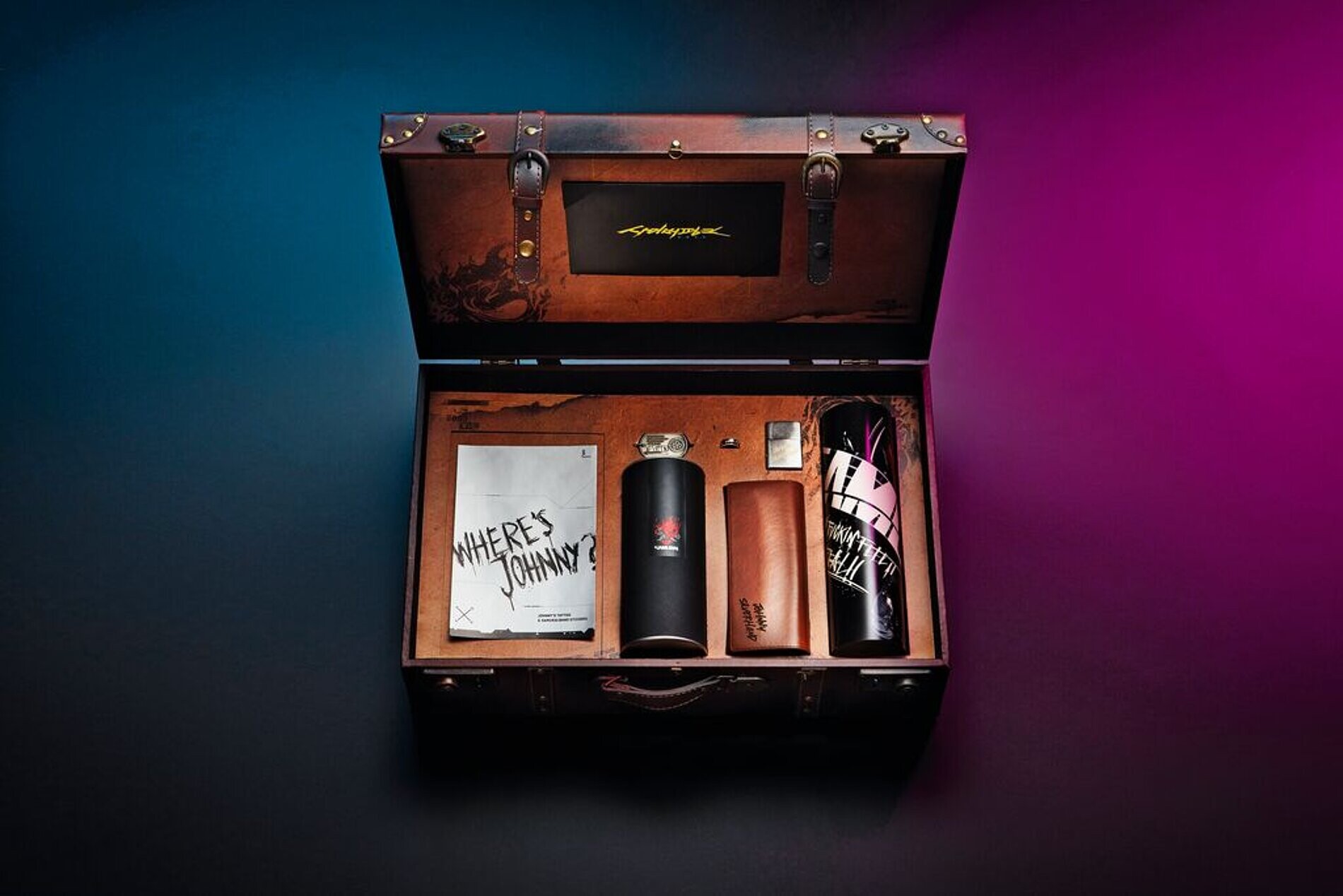
The V-Box is the game itself
Every detail of the V-Box exists inside the game.
V's dog tags and sunglasses, the worn bag V carries, even the memory chip at the center of the entire plot — all reproduced.
The way the V-Box was unboxed also reflected the game's main storyline.
So during the unboxing, viewers got the feeling of going through a tutorial of the game itself.
05
Results
Paid Media Campaign
The 4-phase media plan was executed across 58 days and 12 channels.
Following "Cyberpunk 2077 is everywhere," we secured high impressions and reach — but with per-user frequency tightly controlled to hit the goals efficiently.
Total Impressions
158M
Forecast 104M · 1.5× over
Unique Reach
37M
Reach
CTR
0.23%
Forecast 0.15% · 1.5× over
Frequency
4.27
Avg. impressions per user
Unboxing Live
The unboxing live generated impact comparable to a mid-to-large-scale offline gaming event.
Live Peak
65.6K
Twitch concurrent viewers
Cumulative Views
3.5M
Twitch live cumulative
YouTube
627K
7 pieces of content combined
CPV
$0.02
Production cost per view
Award
Red Dot Award 2021 · Brand & Communication Winner — Cyberpunk 2077 Unboxing Live
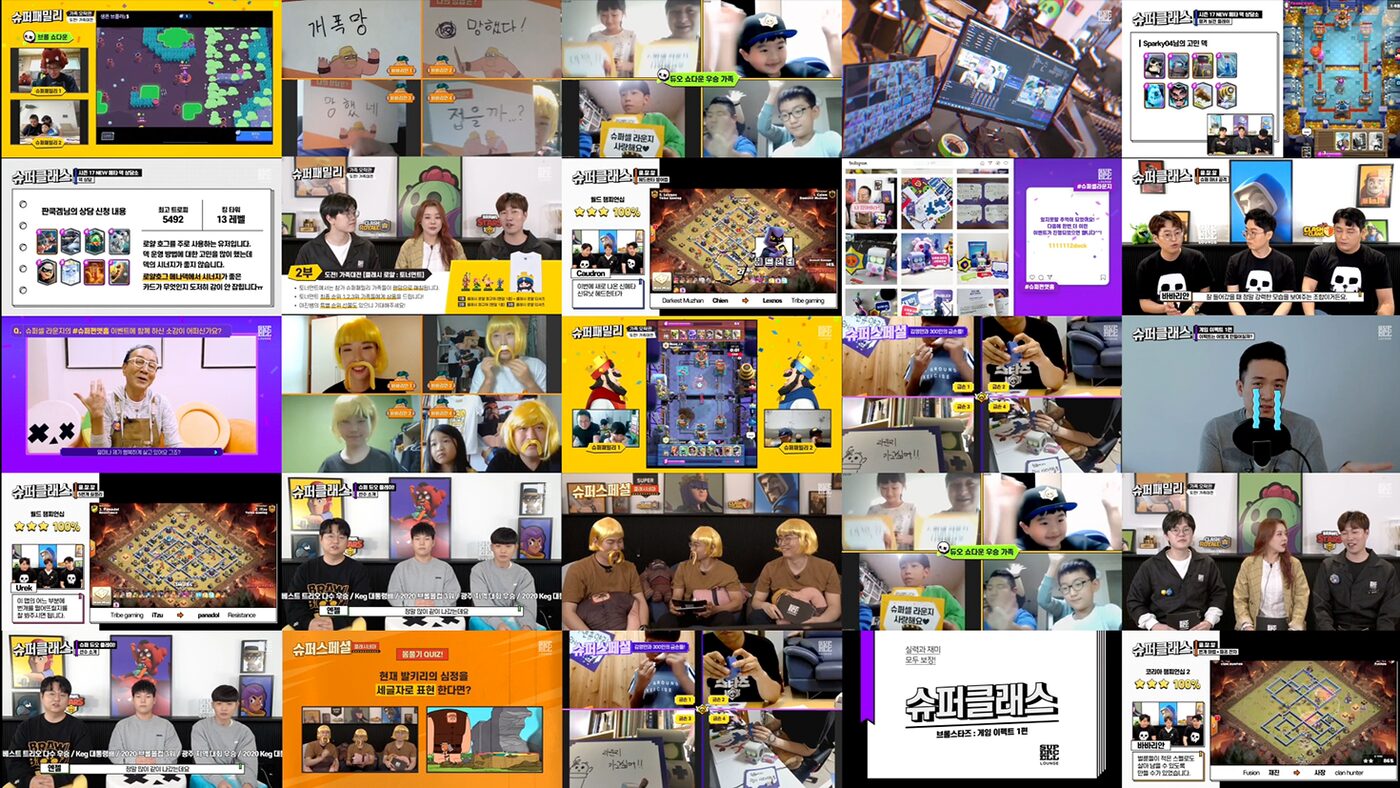
Lounge Lead (full ownership of space, programming, operations, budget, hiring)
Client
Supercell · Brawl Stars · Clash Royale · Clash of Clans + 2 more (5 IPs)
Scale
8–10 person team + 3–4 partner agencies · world's first Supercell brand space
01
Mission
Build a strong community — through an offline space
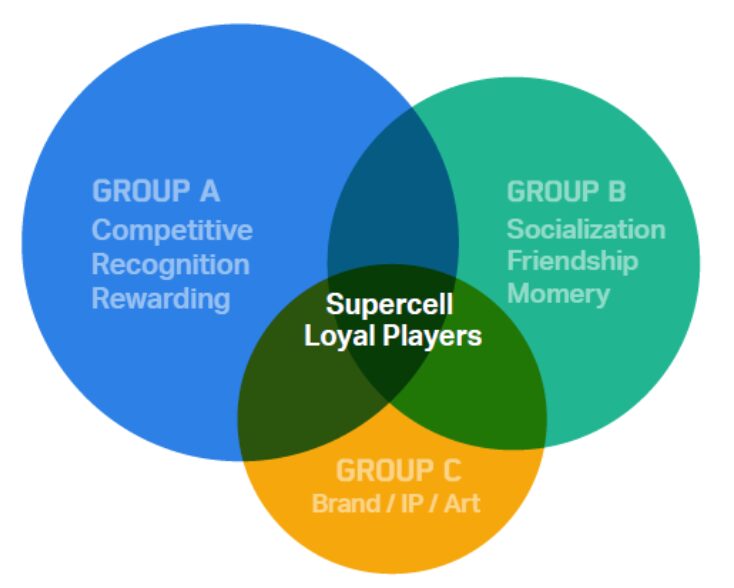
Supercell believed a strong community is the power of an IP.
When diverse relationships form around the games, the community grows stronger and evolves.
So we set out to give a community already gathered around the games a new shared ground — a physical space — so new relationships could form, and the community could grow stronger as a result.
02
Strategy
Deliver Super Fun — the joy of playing together
Supercell games deliver their truest fun when played together.
Until then, that fun only existed online — so I set out to extend it offline through Supercell Lounge.
If players felt Super Fun at Supercell Lounge, relationships would deepen and the community would grow stronger.
03
Planning
Programming
The interior and props of Supercell Lounge mattered, but the core was in the programming.
I believed Super Fun came more from the act of playing together than from the space itself.
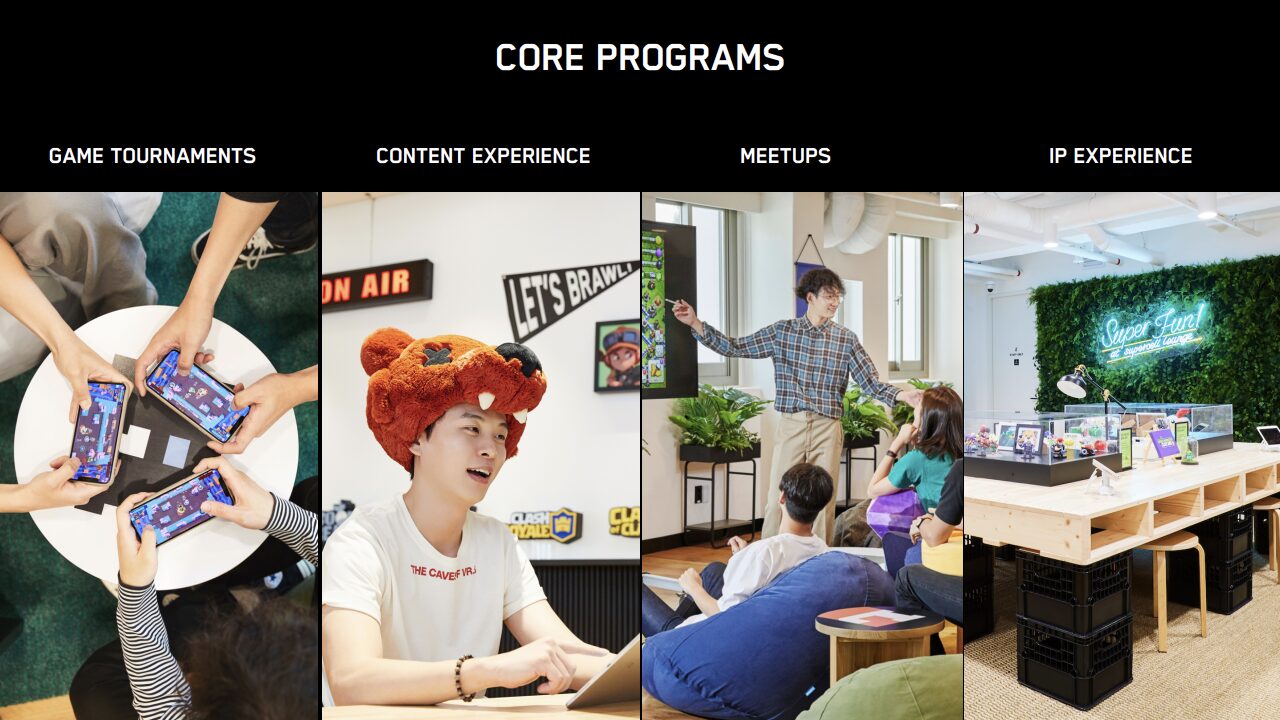
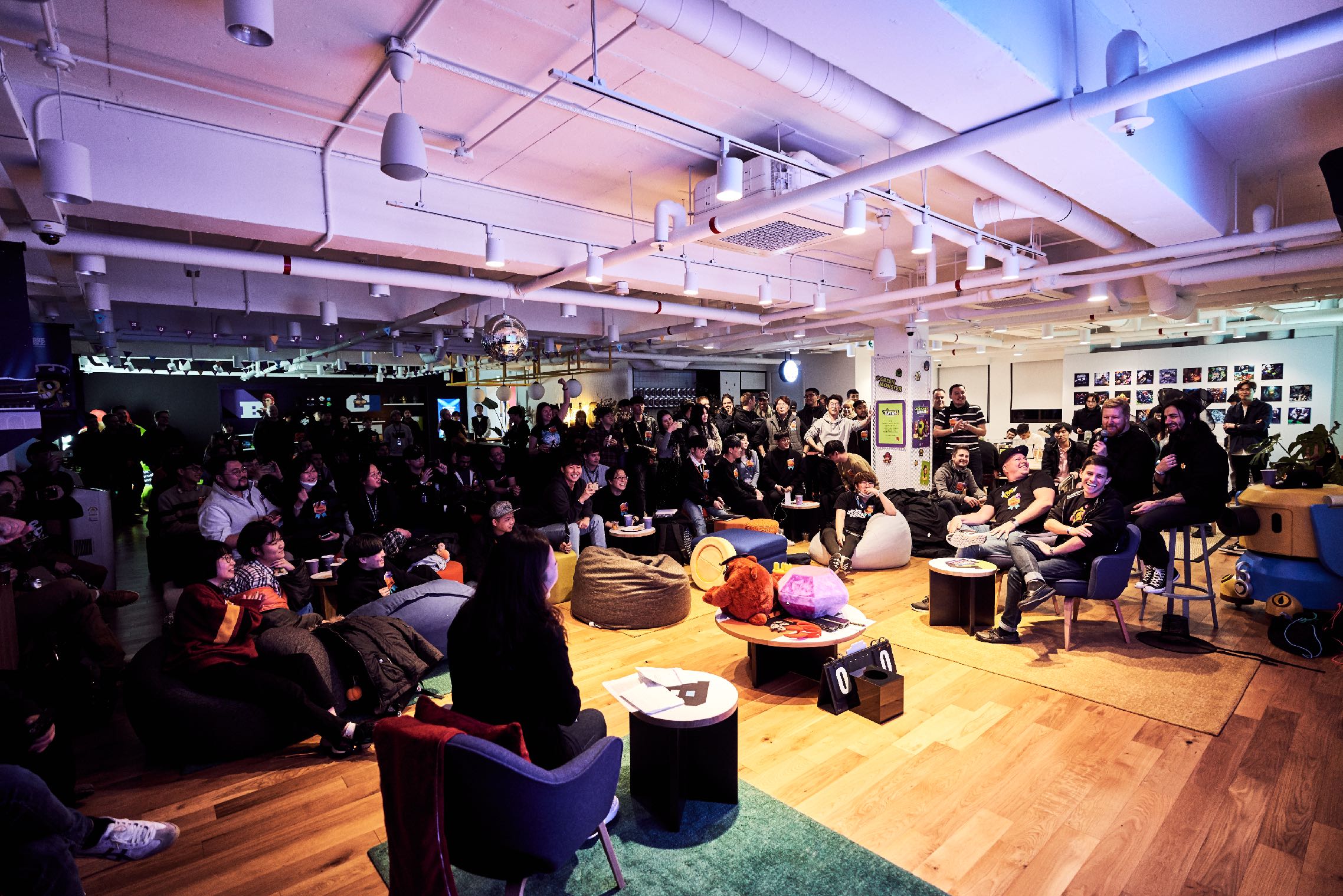
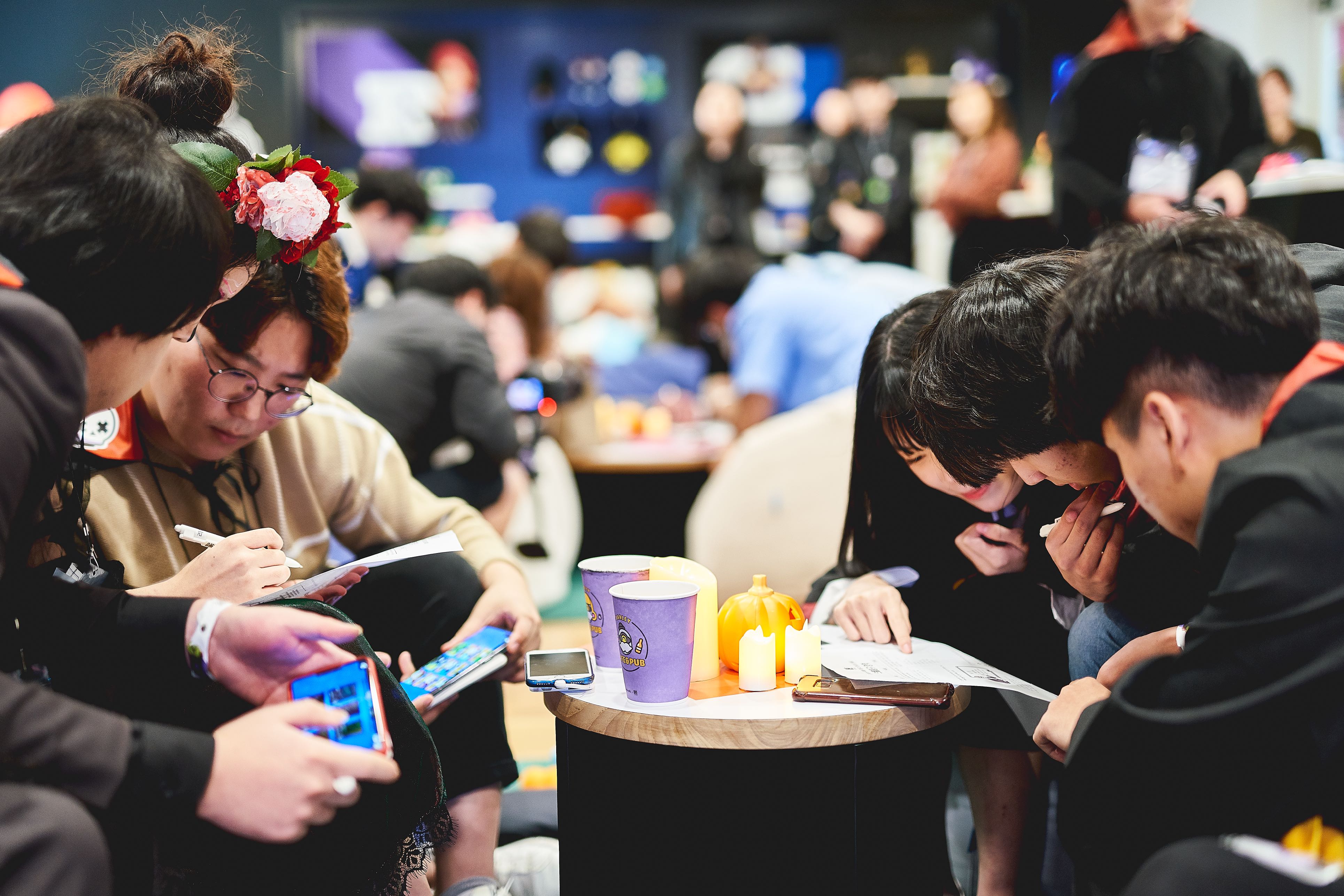
So I designed programs where someone could always play with someone — daily tournaments, cosplay tournaments, family days.
Breaking offline limits
Offline delivers powerful experience, but it carries geographic and spatial limits.
I saw that Supercell Lounge gained more value when the experiences created in the space spread online.
So beyond on-site events, I set up a live studio that visitors could use to film and broadcast — so the Super Fun experience could spread online as content.
04
Execution
Two years of operation — from kick-off to closure
From the first site visit to the final teardown, I was hands-on across every part of Supercell Lounge throughout the 2-year run.
Beyond programming, I owned the operations across the board — from hiring lounge staff to managing partner agencies.
Over two years, we ran 72 recurring and one-off events, producing a total of 118 pieces of content.
Overcoming the pandemic crisis
COVID-19 forced us to suspend operations just 4 months after opening.
During the suspension, I recapped 4 months of operating experience and concluded that Super Fun isn't an experience that has to be created only offline.
Super Fun is generated by strong human interaction — so if online could deliver the strong interaction offline provides, it could deliver the Super Fun experience too.
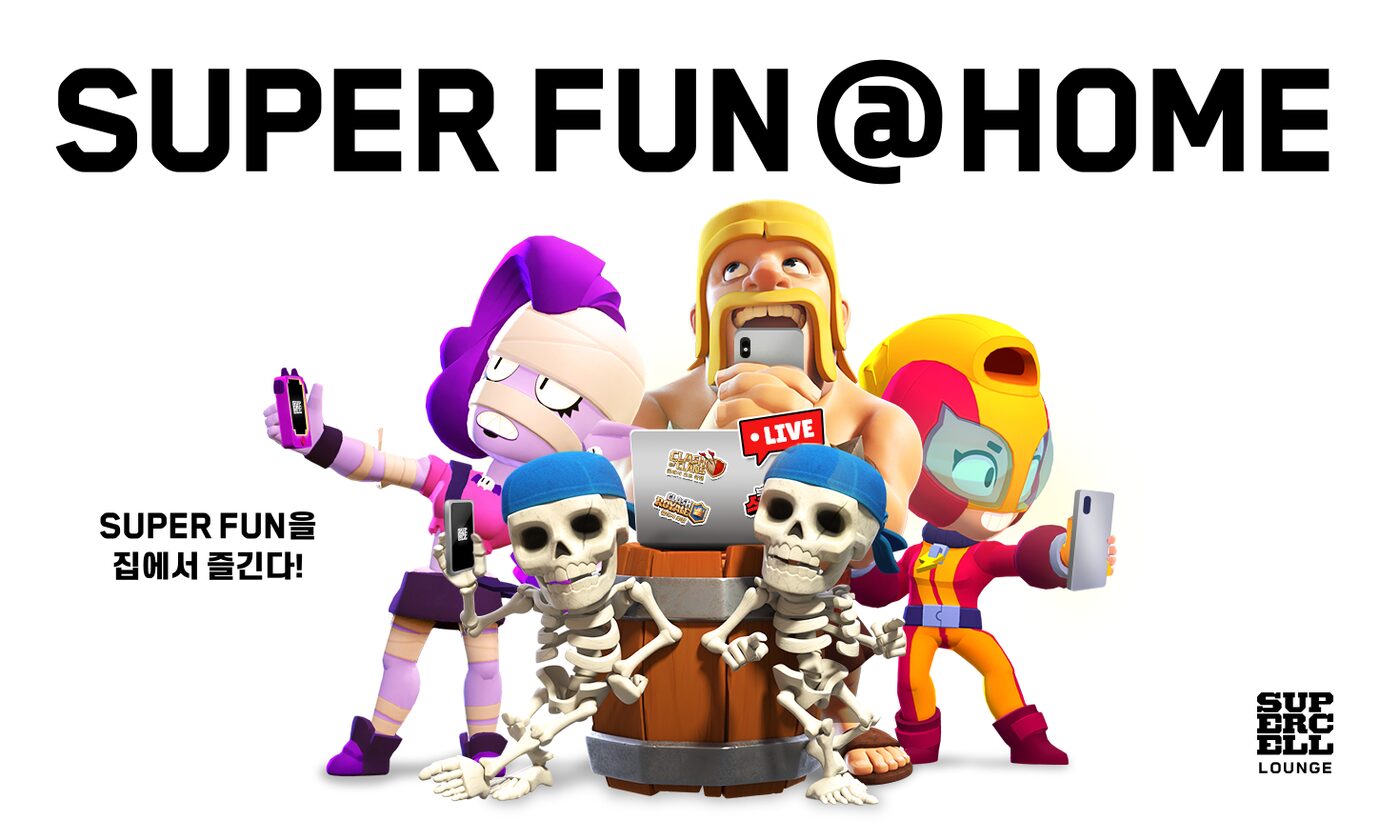
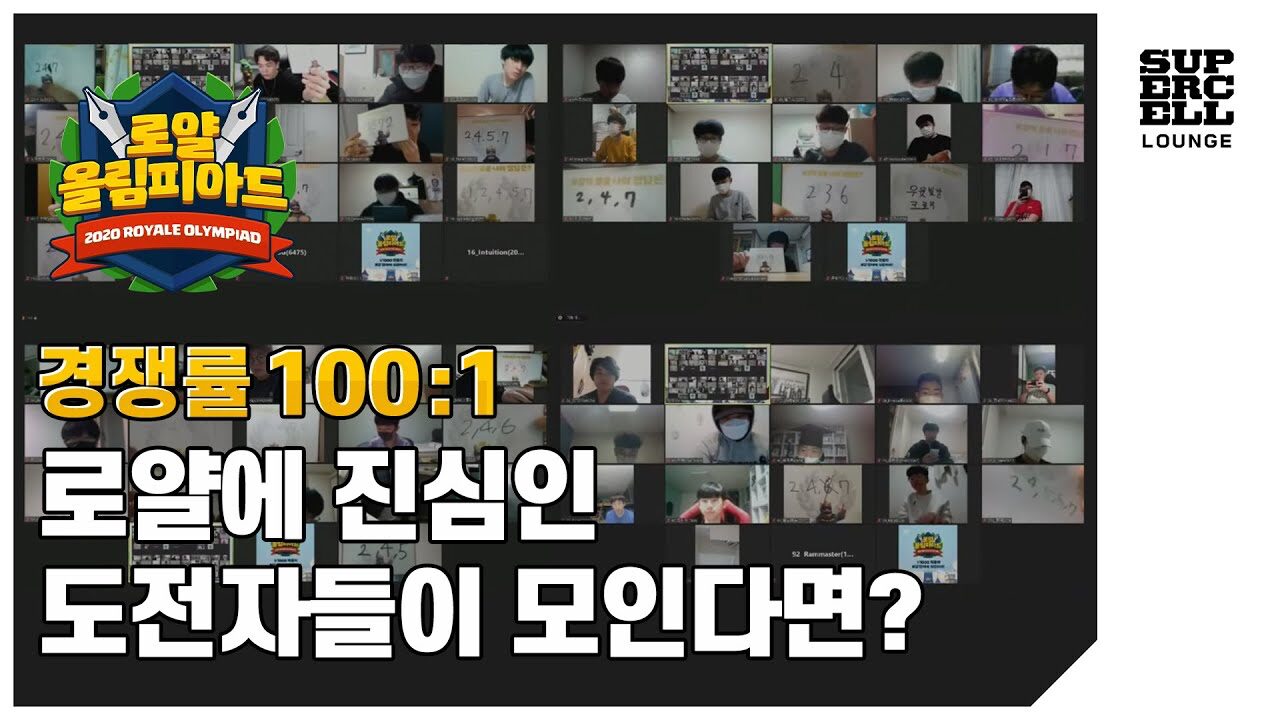
So I rebuilt every existing Supercell Lounge program into an online format.
That pivot became the Super Fun @ Home campaign.
05
Results
Supercell Lounge operating outcomes
36K people experienced Super Fun firsthand through 72 online and offline events.
Applicants
36K
Cumulative sign-ups
Events
72
Recurring + one-off
Contents
118
Official + influencer collaborations
Viewership
11M
Cumulative content views
Watch · Supercell Lounge 2-Year Recap
Awards — A.N.D Award, two consecutive years
A.N.D Award 2019 · Digital Ad & Campaigns / Games · Grand Prix — Supercell Lounge Project
Across nine years in global brand marketing, "why" has consistently mattered more than "what." Finding the "why" is what lets marketing land in the right place at the right moment. To make that discipline operational, I built a 6-step thinking framework.
6-Step Thinking Framework
Step 01
01
Define the Mission
Define the problem, identify root causes, and clarify the mission and KPIs.
Step 02
02
Strategy
Set the direction and the plan to deliver the mission.
Step 03
03
Campaign Design
Relentlessly design the most fitting and effective way to execute the strategy.
Step 04
04
Precise Execution
Continuously verify alignment with the mission, assess what's working, and improve.
Step 05
05
Measurement
Measure mission and KPI delivery against the pre-defined targets, without compromise.
Step 06
06
Insight
Crystallize the learnings from success and failure, and feed them into the next campaign.
End-to-End with AI Agents
I run agency-level marketing work with 14 AI agents. From directing and planning to image and video production and web page production, they cover the full breadth of marketing and maximize efficiency.
Direk
Director · Orchestrator
Strategy & Analysis
Campe
Campaign strategy & planning
Tren
Trend research
Day
Data analytics
Content & Copy
Konten
Social content planning
Kapi
Copywriting
Edi
Articles & PR
Channel & Performance
Commu
Community operations
Peopo
Performance marketing
Design & Web
Adi
Art direction
Ua
UI/UX design
Diza
Graphic design
Websa
Microsite production
Vidi
Motion graphics
04 / Index — ClosingPortfolio · 2026
N°04
Closing.
Thank you for reading this portfolio to the end.
A coffee chat or an interview, either works. One email is all it takes.